Feeding Basics5 min read
Why Won't My Dog Finish Their Food?
By The CBE Pet Kitchen team, Cooks at CBE Pet Kitchen, Coimbatore
Key takeaways
- A sudden loss of appetite, or no food for more than a day, is a reason to see your vet first.
- The most common cause in a healthy dog is simply too much food or too many extras.
- Set meal times and lifting the bowl after 15 minutes fixes most picky eating within a week.
- Adding something tastier every time teaches a dog to wait for it.
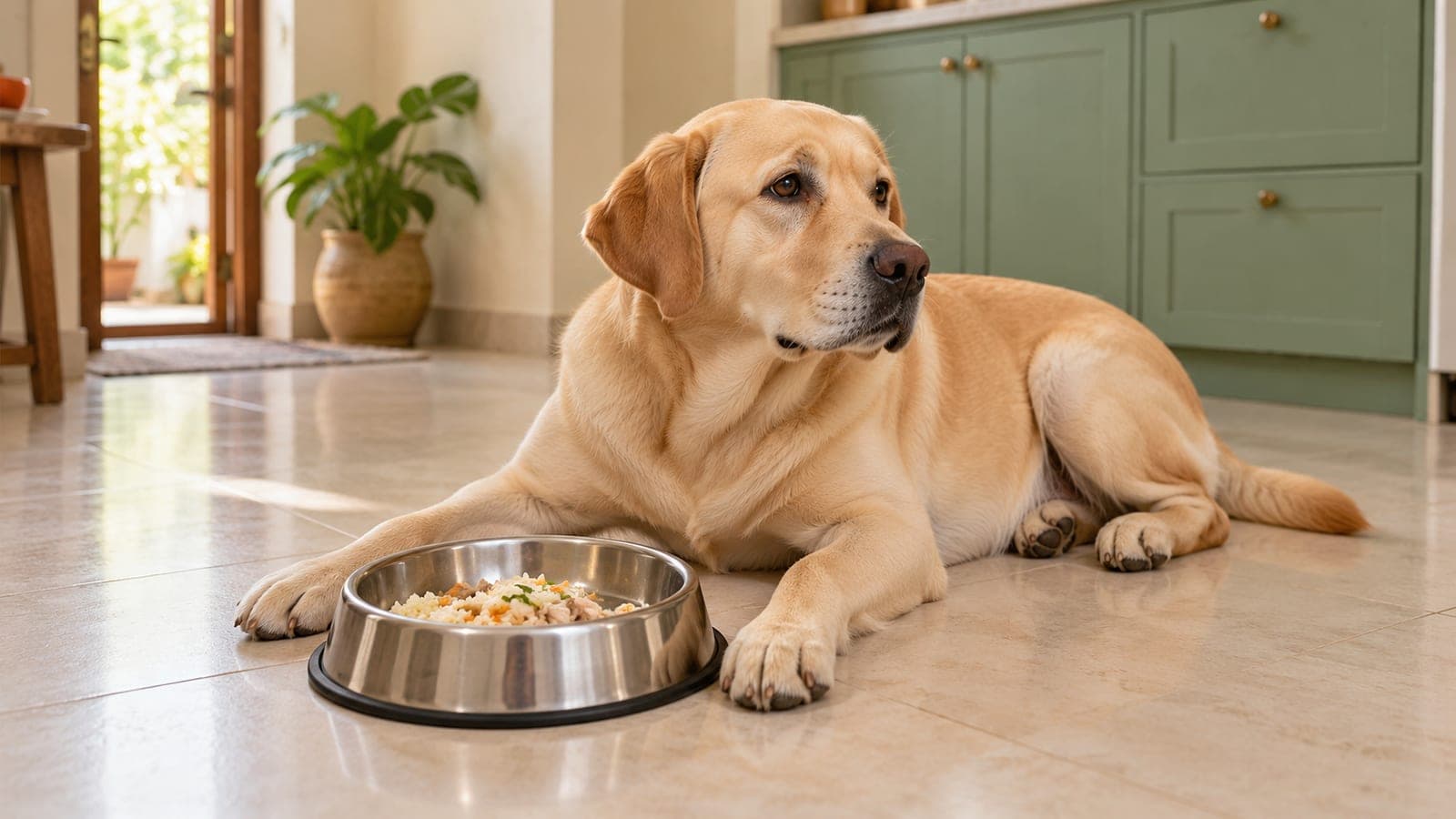
Few things worry a dog parent like a full bowl at the end of the day. You wonder whether they are ill, whether they've gone off the food, or whether you've done something wrong. Often, the honest answer is less dramatic: your dog simply isn't hungry at that moment, and the reason is somewhere in their day.
This guide helps you work out which reason it is, when to call the vet, and how to get mealtimes back on track without a nightly bargaining session at the bowl.
Is my dog sick, or just not hungry?
Start here, because a few signs mean you should see the vet before you change anything else. Call your vet if your dog:
- Stops eating suddenly after always being a good eater
- Skips meals for more than a day (or any meal, for a puppy or an older dog)
- Is vomiting, has diarrhoea, or seems tired, hides or is unusually quiet
- Is losing weight
- Drops food from their mouth, chews on one side or paws at their face, which can point to tooth or mouth pain
- Has eaten something they shouldn't have; our guide to unsafe foods in an Indian kitchen lists the common ones
If none of these fit and your dog is bright, playful and happily takes a treat, the cause is very likely one of the everyday reasons below.
Is my dog getting too much food?
This is the most common reason of all. A dog who leaves a quarter of every meal is often telling you the portion is bigger than they need. Food amounts on packets and in online charts are starting points, and a calm dog in a flat needs less than a working dog on a farm.
Check your dog's daily amount against their weight in our guide to how much fresh food your dog needs, and then look at their body. If you can't feel their ribs easily under a thin layer, the portion is probably too big. Try reducing it by 50 g a day for two weeks and see whether the bowl comes back clean.
Are treats and table scraps filling my dog up?
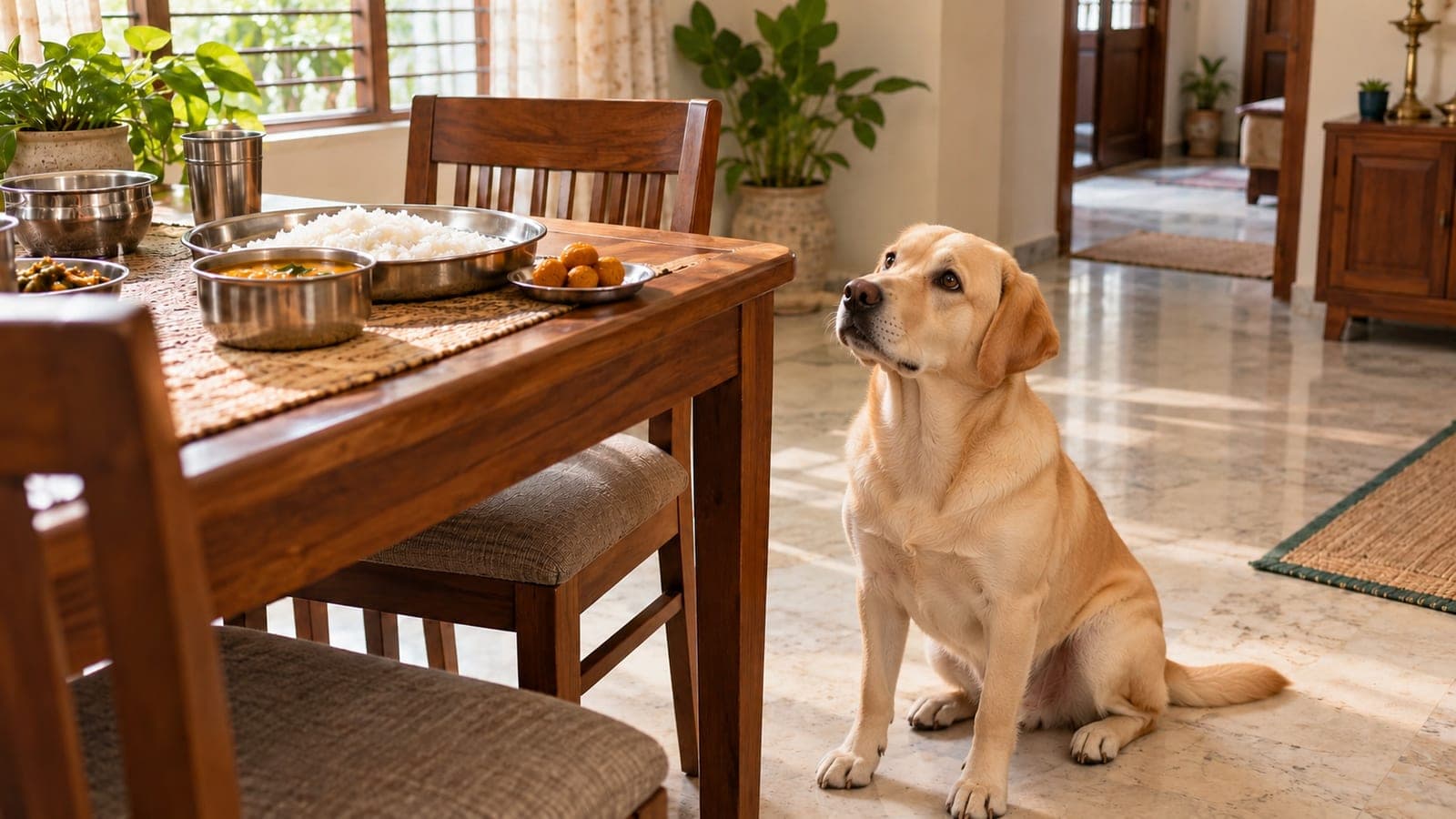
Treats count as food, and in many Indian homes the extras add up quickly: a biscuit with morning tea, a piece of chapati at lunch, a bit of everyone's dinner. Each one is small, but together they can easily take the edge off a dog's appetite at mealtime.
A common guideline is to keep treats and extras to about a tenth of what your dog eats in a day. If the whole family feeds your dog, agree on one person who gives treats, or put the day's treats in a small box each morning so everyone can see when they're gone.
Does food left out all day cause picky eating?
Yes, often. When food is always available, a dog never gets properly hungry, so no single meal feels urgent. They graze, leave some, and come back later. With fresh food this also becomes a food-safety problem in our climate: food sitting out in a warm kitchen spoils, so it should go back in the fridge within 2 hours.
Can heat, stress or a new routine change appetite?
Yes. Plenty of everyday changes put dogs off their food for a day or two:
- Hot weather. Many dogs eat less in the hottest weeks of April and May. Feed in the cooler hours, early morning and evening.
- Festivals and noise. Firecrackers at Deepavali and wedding processions frighten many dogs, and a scared dog rarely eats. Our guide to keeping your dog calm during Deepavali crackers has a plan for festival week.
- Visitors, travel or a house move. New people and places unsettle routines.
- A new food. A sudden change can put some dogs off. A slow, week-long switch works better; see our 7-day switch from kibble to fresh food.
- The bowl and the spot. A noisy corridor, a slippery floor or another dog nearby can make some dogs nervous at the bowl.
These usually settle on their own once the routine is back. If appetite stays low for more than a day or two, call your vet.
Have I taught my dog to wait for something better?
This one is hard to hear, because it comes from love. When a dog leaves their meal and we add chicken, curd or a bit of our own dinner to tempt them, they learn quickly: leave the bowl, and something better arrives. A few rounds of that and you have a dog who won't touch a plain meal.
The fix is consistency, not strictness. Same food, same times, the same small topping if you use one, and no rescue offers when a meal is skipped.
How do I get my picky dog eating again?
Most healthy dogs get back to finishing their meals within a week with a steady routine. Once your vet has ruled out illness, try this:
- Pick two fixed meal times, such as 7 AM and 7 PM, and stick to them every day.
- Serve the meal in the same quiet place.
- Leave the bowl down for 15 minutes, then lift it, even if food is left.
- Refrigerate the leftover fresh food straight away and use it within 24 hours. Don't offer anything else until the next meal.
- Cut treats back to a few small pieces a day, given by one person.
- Walk or play before meals; a little activity builds appetite.
- Keep this up for 7 days before deciding whether it's working.
| Day | What usually happens |
|---|---|
| Days 1 to 2 | Some meals left, your dog checks whether extras still appear |
| Days 3 to 4 | Most meals finished, faster eating at the start |
| Days 5 to 7 | Clean bowls at set times for most dogs |
When should I change the food instead?
If your dog finishes treats happily but still turns away from their food after a week of steady meals, the food itself may not suit them, or it may be time to look at the portion again. You can see every recipe and what goes into it on Our Food, and choose your dog's daily grams on Plans & Prices to see the right amount for their weight.
Common questions
How long can a healthy adult dog go without eating?
Don't wait to find out. If an adult dog skips meals for more than a day, or a puppy, older dog or unwell dog skips even one, call your vet.
Should I add chicken or curd to make my dog eat?
Occasionally is fine. Doing it every time a meal is left teaches your dog that waiting gets them something better. Keep any topping small and the same every day.
Is it bad to leave food out all day?
For most dogs, yes. Food left out takes away hunger at mealtimes, and fresh food left out in warm weather spoils. Refrigerate fresh food within 2 hours and use it within 24 hours.
My dog eats treats but not meals. Are they really sick?
Usually not. A dog who eagerly takes treats but ignores meals is often full or holding out for something better. If they are also tired, vomiting or losing weight, see your vet.
Find your dog's daily price
See your dog's daily price for every plan.