Switching Food6 min read
How to Switch Your Dog from Kibble to Fresh Food in 7 Days
By The CBE Pet Kitchen team, Cooks at CBE Pet Kitchen, Coimbatore
Key takeaways
- Take about a week; a slow switch is easier on your dog's stomach.
- Mix by weight, not by scoops, so each step is the real ratio.
- Loose stool means stay on the current step longer, not stop.
- Keep the total food the same each day while the mix changes.
- Don't add new treats during the switch, so you know what caused any upset.
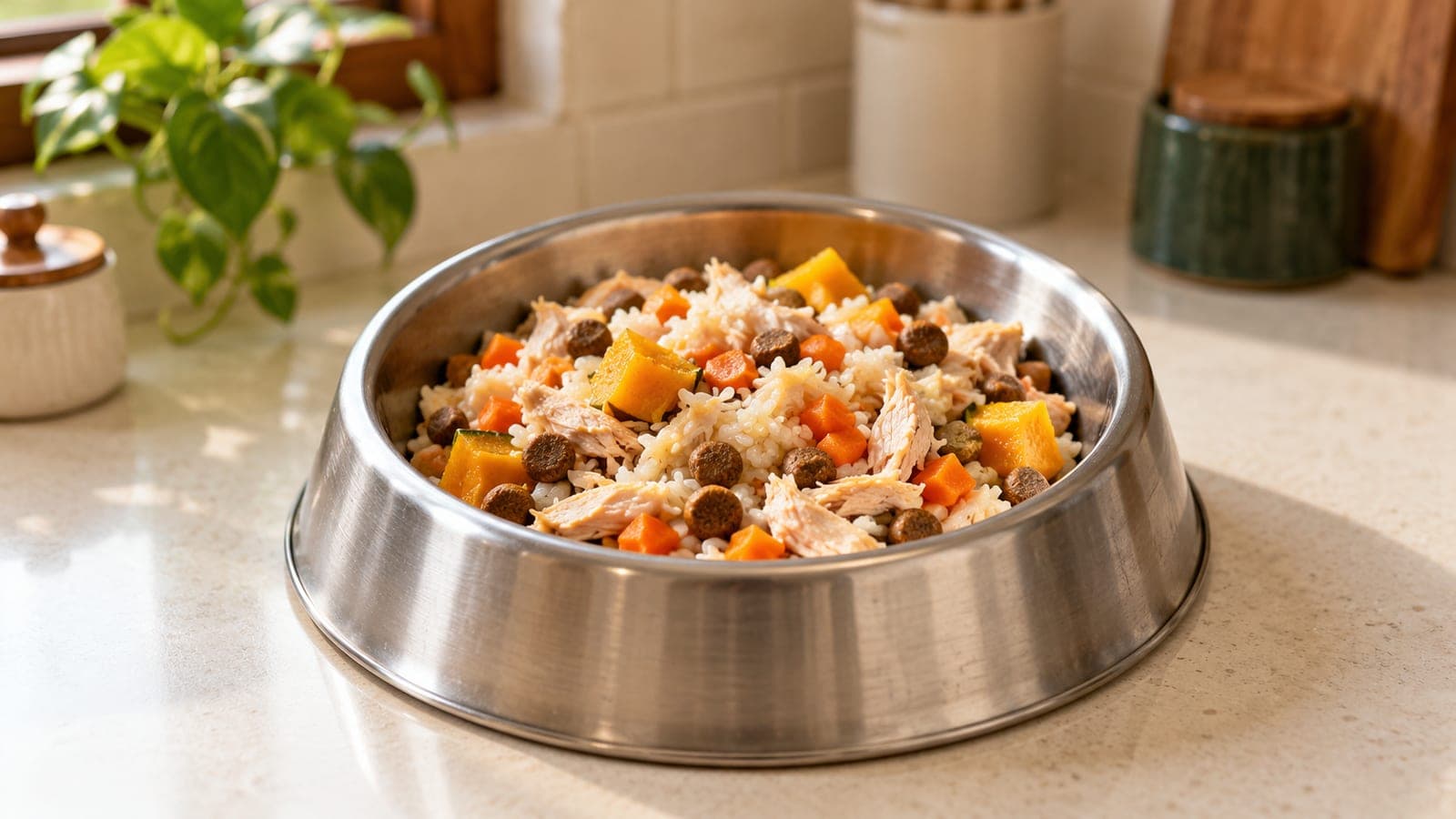
The kindest way to change your dog's food is slowly. Over about seven days you replace a little more of the kibble with fresh food each day, until the bowl is all fresh. Most dogs barely notice the change, and their stomach has time to settle into the new food.
If you've decided to try fresh food, you have probably already noticed how your dog watches you cook. That interest is a good start. The aim of the week below is to turn it into a comfortable change for their stomach too, not a sudden one.
Why switch slowly instead of all at once?
A dog's digestion gets used to whatever it eats every day. Kibble is dry and the same in every bite; freshly cooked food has much more water and real pieces of meat, rice and vegetables. Changing overnight can mean a loose stomach for a day or two, even when the new food suits your dog well.
A gradual switch gives your dog's stomach time to adjust. It also lets you see how your dog takes to the new food, step by step, before the bowl is all fresh. If something doesn't agree with them, you notice it at a quarter of the bowl instead of the whole bowl.
What does a 7-day switch look like?
Keep the total amount of food the same every day and change only the mix. If you're not sure of your dog's total, start with our guide to how much fresh food your dog needs.
| Days | Fresh food | Kibble |
|---|---|---|
| Days 1 to 2 | About a quarter | About three quarters |
| Days 3 to 4 | About half | About half |
| Days 5 to 6 | About three quarters | About a quarter |
| Day 7 | All fresh | None |
The days are a guide, not a deadline. Some dogs breeze through in a week. Others need ten days, and that is perfectly fine. What matters is that each step feels settled before you move to the next.
How to measure each step
- Weigh your dog's usual daily kibble once, so you know the starting amount.
- Work out the fresh food for the day's ratio from the daily grams for your dog's weight.
- Mix the two well in the bowl so your dog can't eat around the kibble.
- Split the day's food into the same meals you use today, morning and evening for most dogs.
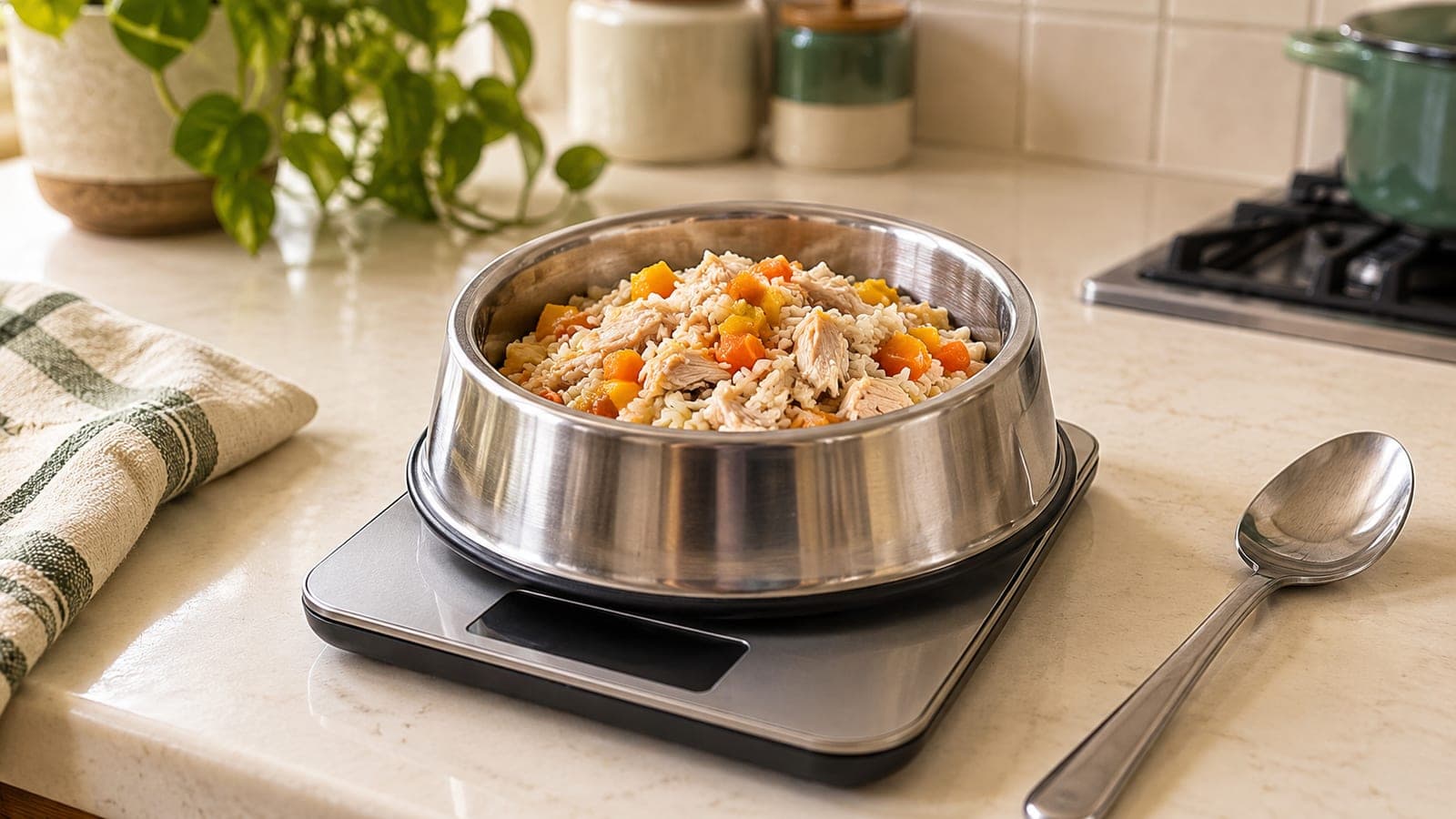
A simple kitchen scale makes the whole week easier. If you don't have one, the scale you use for vegetables or baking is perfect. Put the empty bowl on it, press zero, then add each food.
What if my dog eats home food now, not kibble?
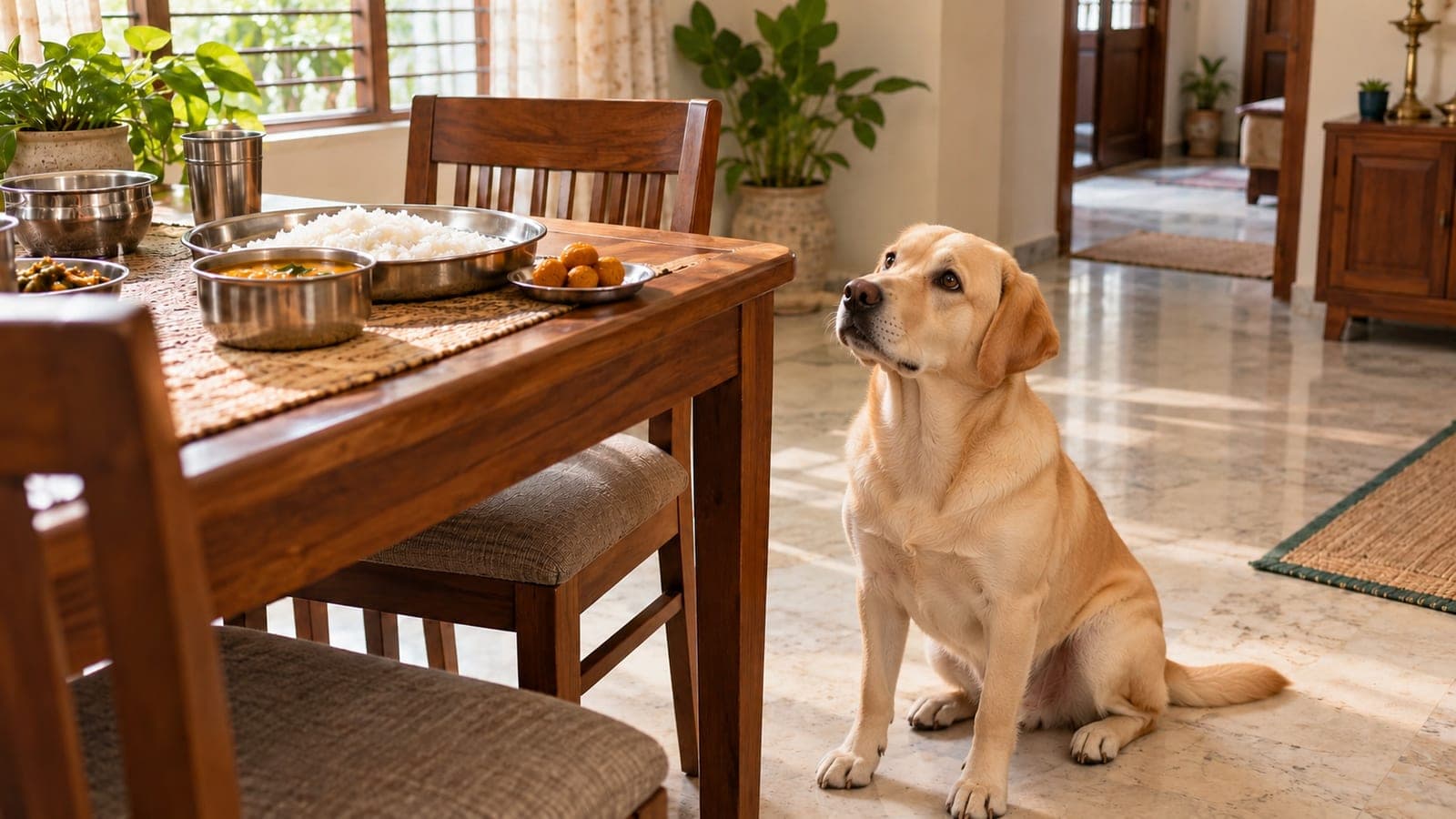
Many dogs in Indian homes eat what the family eats: rice with curd, chapati, a little dal, some chicken on Sundays. The same slow approach works. Replace a quarter of their usual home food with fresh food for two days, then half, then three quarters, then all of it.
Two things are worth watching when you move from home food. First, home food often carries onion, garlic, salt or tamarind from the family's cooking, and those are worth leaving behind completely; our guide to foods in an Indian kitchen that are unsafe for dogs explains why. Second, curd and milk upset some dogs' stomachs. If curd rice has given your dog loose stools before, leave the curd out during the switch so it doesn't muddy what you're watching for.
What should I watch for during the switch?
Most changes during a switch are small and settle within a day or two. Keep an eye on:
- Stool: a little softer for a day is common. Very loose stool means slow down.
- Appetite: many dogs eat faster once fresh food is in the bowl. That's normal.
- Energy: your dog should be their usual self. If they seem unwell, talk to your vet.
- Colour: if the recipe includes beetroot, stool or urine can look reddish. That comes from the beetroot and is normal.
If stool turns loose, stay on the current step for two more days before moving on. You don't need to go back to all kibble. If it doesn't settle, or your dog is vomiting, off their food or low on energy, call your vet.
One more habit helps a lot: don't introduce anything else new during the switch week. No new treats, chews or biscuits. If your dog's stomach does get upset, you want to know whether it was the change in food, not guess between four different things.
What if my dog refuses the fresh food, or only eats the fresh food?
Both happen, and both are easy to handle.
If your dog picks out the fresh pieces and leaves the kibble, mix more thoroughly, or soak the kibble in a little warm water for a few minutes so the two blend together. If their stool is firm, you can move to the next step a day early.
If your dog sniffs the new food and walks away, give it time. Dogs can be cautious with new smells. Serve the meal, lift the bowl after 15 minutes, and try again at the next meal without adding extras to tempt them. Our guide on why a dog won't finish their food explains why tempting with toppings usually makes things harder.
Should older dogs or dogs with sensitive stomachs switch differently?
Yes. Take it slower. Spread the same four steps over 10 to 14 days, spending three or four days at each ratio instead of two. Older dogs, dogs who have had stomach trouble before, and very small dogs often do better with that extra time.
If your dog has a health condition, is on medication, or eats a diet your vet prescribed, talk to your vet before you change anything. A prescribed diet has a job to do, and your vet should decide what replaces it.
How do I keep the fresh food at its best?
Freshly cooked food needs the fridge, not the cupboard. Refrigerate each day's pack within 2 hours of delivery and use it within 24 hours, or freeze it. Thaw frozen packs overnight in the fridge, never on the counter.
Most dogs are happy with food straight from the fridge, but some prefer it less cold. Take the meal out 15 minutes before serving, or add a spoon of warm water and stir. If you warm it, stir well and check there are no hot spots. Our How it Works page shows how the daily packs arrive.
Where does a 3-day Trial fit into this?
A 3-day Trial covers the first steps of the switch. Your dog tastes the food, you see how their stomach takes it, and you get a feel for the daily packs. At the end of the Trial most dogs are still at a quarter or half fresh food, which is exactly where they should be. If it suits your dog, carry the switch on with a plan; if it doesn't, you've only spent three days finding out.
When is the switch finished?
By day 7, or a little later for some dogs, your dog is on fresh food alone. From then on, check their body shape every week or two and adjust the daily grams if they look too lean or too round. Change by 50 g at a time and give each change two weeks.
You can see every recipe and its full formula on Our Food, and the daily price for your dog's portion on Plans & Prices.
Common questions
Can I switch to fresh food in one day?
Some dogs manage, but many get a loose stomach from a sudden change. A week-long switch costs you nothing and is much gentler, so we suggest it for every dog.
My dog won't eat the kibble any more once fresh food is in the bowl. What now?
That's common. Move to the next step a day early if their stool is firm. If it isn't, keep the ratio and mix the two well so they can't pick out the fresh food.
Does a 3-day Trial give enough time to switch?
A Trial shows you whether your dog likes the food. Most dogs are still mixing with kibble at the end of it, which is fine. Keep the switch going with a plan when you're ready.
My dog's stool looks reddish. Should I worry?
If the recipe has beetroot, a red tint in stool or urine is normal and comes from the beetroot. If you see red with no beetroot in the bowl, or your dog seems unwell, call your vet.
Should an older dog or a dog with a sensitive stomach switch faster or slower?
Slower. Spread the same steps over 10 to 14 days, and talk to your vet first if your dog has a health condition or is on a special diet.
See how your dog takes to fresh food
Try 3 days of freshly cooked food, delivered in the morning. Your money back if it doesn't suit.